Endangered Heritage: Historic Jamestowne’s Fight Against Rising Waters
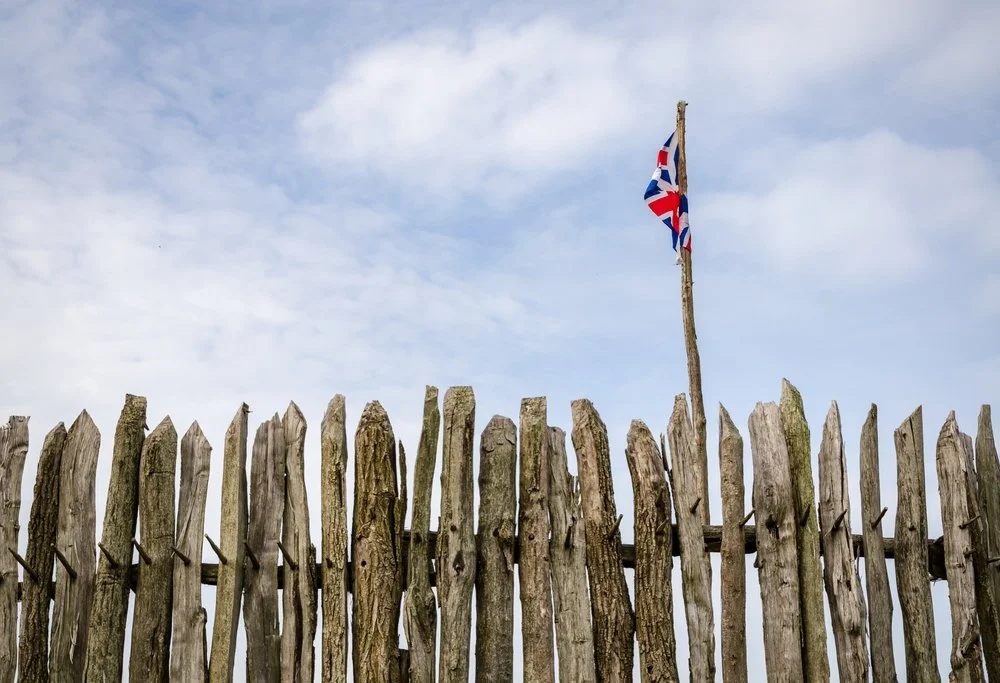
Historic Jamestowne, part of the Colonial National Historical Park in Virginia, USA
When most people think of Jamestown, they picture its iconic place in American history: the first permanent English settlement, established in 1607 on the banks of the James River in Virginia. It’s a site woven into stories of early colonists, Powhatan diplomacy, struggle, resilience, and the seeds of a nation that would grow from its fragile beginnings. But today, more than four centuries later, Jamestown is facing a very different kind of threat—one not from rival nations or unfamiliar landscapes, but from the slow, steady encroachment of water.
Travel & Culture Salon proudly supports the World Monuments Fund, which has protected over 700 unique sites in 112 countries.
A Landscape That Shaped a Nation
Jamestown Island was chosen for its strategic advantages. It was secluded, defensible, and offered deep-water anchorage. For the colonists who arrived aboard the Susan Constant, Godspeed, and Discovery, this marshy island represented both opportunity and a steep challenge. Disease, brackish water, and conflict defined the early years, yet the settlement endured.
Over time, Jamestown grew into a hub of colonial life. It witnessed the introduction of tobacco cultivation, the arrival of the first enslaved Africans in English North America in 1619, and the emergence of one of the earliest representative government in the New World.
The stories embedded in its soil—literally—continue to reshape what we know about early America. Archaeologists on site have uncovered fort outlines, personal items, tools, chapels, cooking pits, and graves that reveal intimate details of daily life.
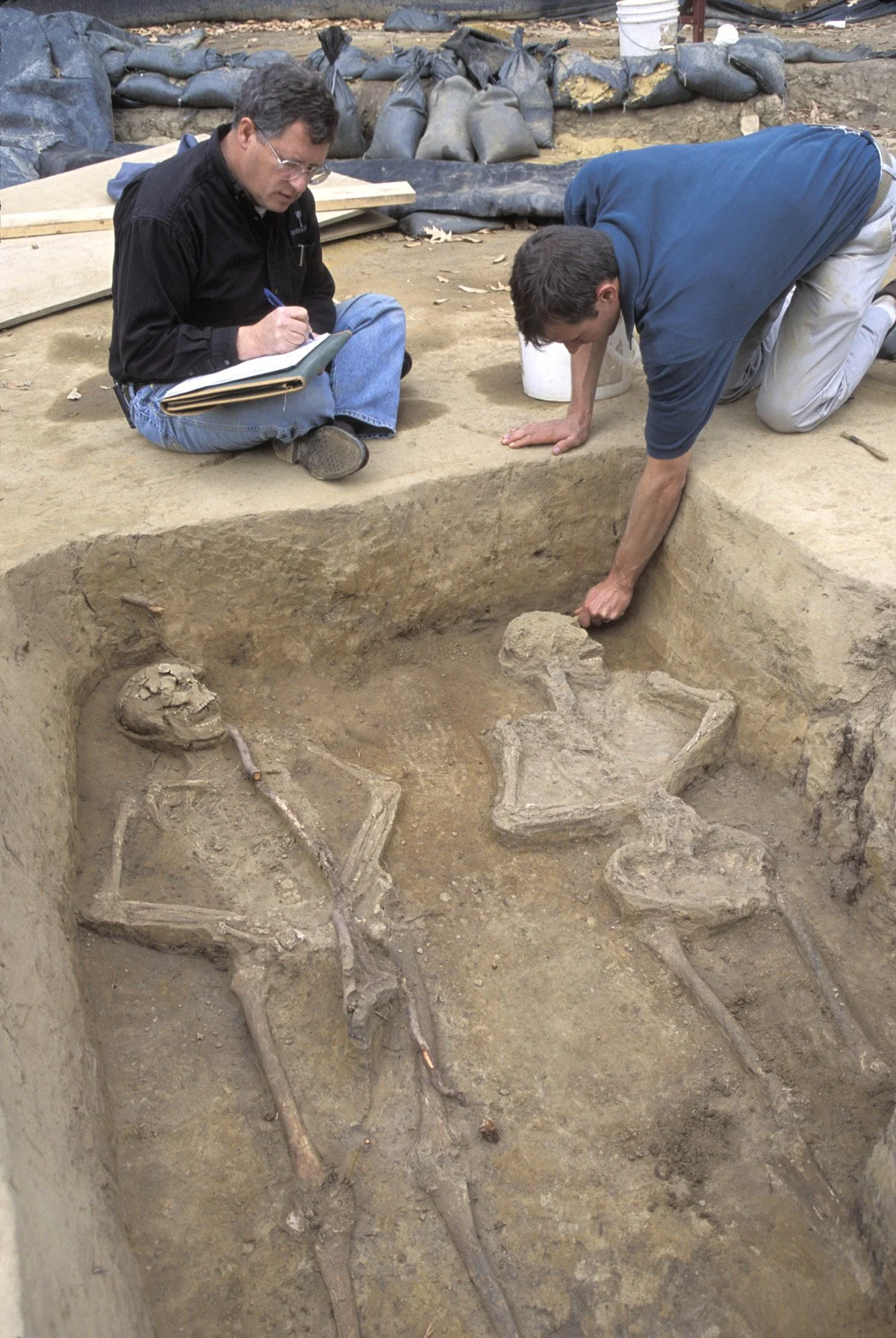
Forensic anthropologist Douglas Owsley (left) and APVA Preservation Virginia/ Historic Jamestowne archaeologist (Danny Schmidt) discussing the double burial of two European males. James Fort site, 1607.
What’s Already Been Lost
What makes Jamestown especially vulnerable is that loss is no longer theoretical. Over centuries, the James River has steadily eroded the island’s shoreline, carrying away large portions of the original settlement. Archaeologists estimate that hundreds of feet of land have already disappeared, along with buildings, fortifications, and layers of archaeological evidence that can never be recovered. In some areas, locations documented on early maps are now underwater. Preservation studies warn that, without continued intervention, a significant portion of Historic Jamestowne—often estimated at up to half of the site—could be lost in the coming decades. Jamestown is one of the few historic sites where scholars can point not only to what may be at risk, but to what has already vanished—especially the everyday spaces that help reconstruct the lives of Indigenous peoples, enslaved Africans, women, and laborers whose histories depend most heavily on the archaeological record.
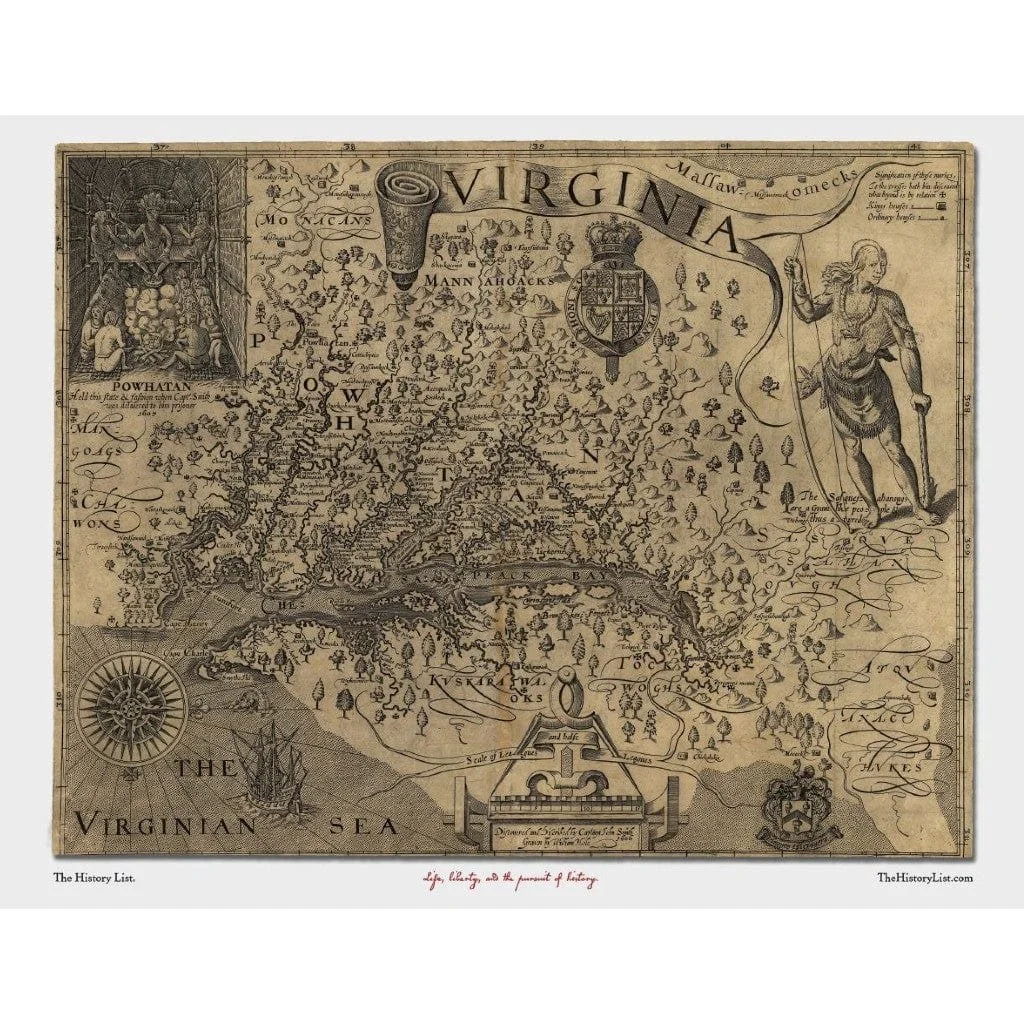
Captain John Smith created the first detailed map of the Chesapeake Region. His masterpiece map of Virginia, published in 1612, remained in active use for seven decades and opened this part of North American to European exploration, settlement, and trade. The geographical accuracy is astounding given that Smith traveled about 2,500 miles in a series of short expeditions and had only primitive mapmaking tools to work with. Smith's map records not only the geographic features of the Chesapeake, but also its cultural aspects, including more than 200 Indian towns. Many of the place names remain in use today. Image Source: Library of Congress Geography and Map Division Washington, D.C.
A Hidden Threat Rising Underfoot
Despite its historical stature, Historic Jamestowne is now considered one of the most climate-endangered heritage sites in the United States. Rising sea levels are reshaping the island on multiple fronts. Sea levels along the James River are rising at nearly twice the global average, driven by global sea-level rise and local land subsidence, and parts of the island already flood during seasonal high tides and heavy rainfall. Saltwater is also beginning to seep into the ground, reaching the archaeological layers that protect centuries-old artifacts; once saltwater touches materials such as iron, bone, or wood, deterioration accelerates rapidly.
At the same time, stronger and more frequent storm surges are hitting the island’s soft shoreline, eroding the edges and threatening areas that still hold unexcavated history. Taken together, these shifts mean that—with no major intervention—significant portions of Jamestown could be underwater by the end of the century, perhaps even sooner.
This is not simply about protecting old buildings. It’s about safeguarding one of the most important archaeological landscapes in American history, a place where the physical record of the country’s earliest colonial years is still being uncovered.
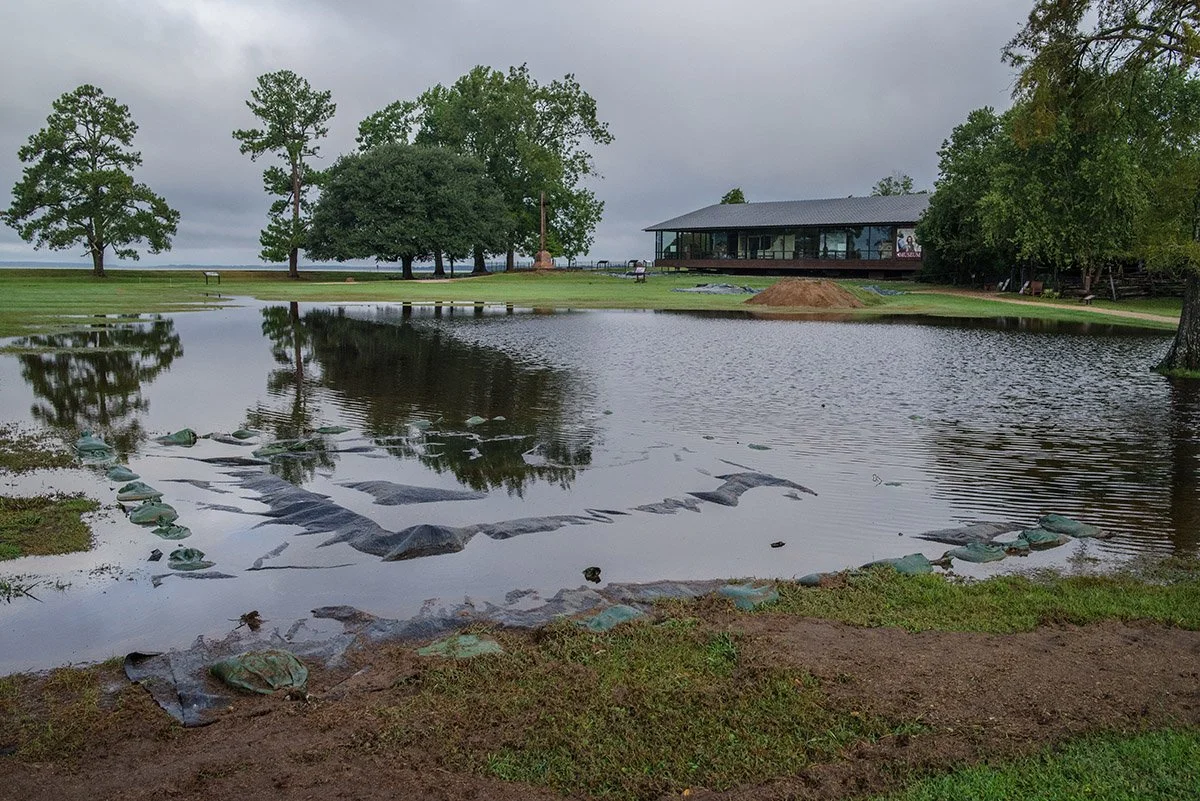
The region around Jamestown is increasingly flood-prone and the wet/dry cycles are damaging the archaeological resources below the surface.
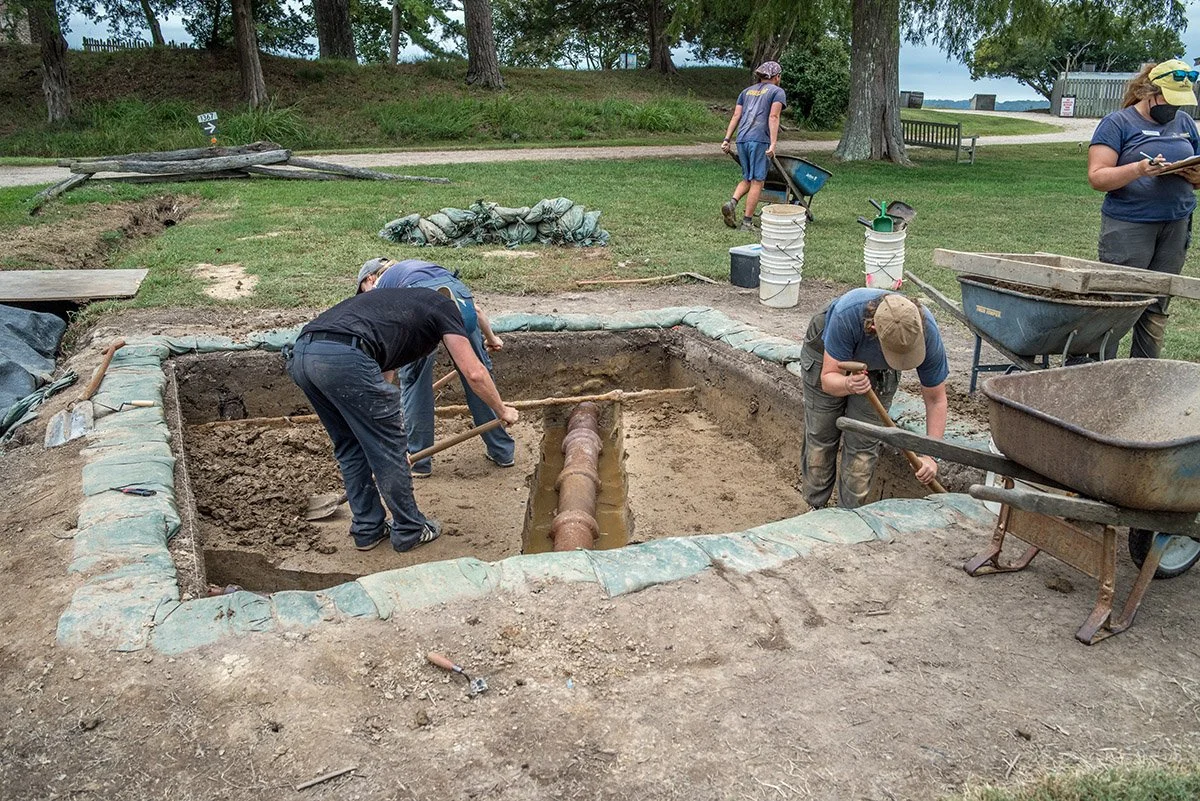
The Jamestown Rediscovery team works around a large drainage pipe installed to prevent flooding at Fort Pocahontas (seen at rear). A smaller pipe running left/right in the photo used to provide water to a horse trough that has since been relocated.
Preservation Efforts: A Race Against Time
Preservation efforts at Jamestown have become a race against time. Jamestown Rediscovery and the National Park Service are now working together on a series of ambitious measures designed to keep the island intact. Shoreline fortifications are being built to slow erosion along the river’s edge, while new drainage systems help redirect floodwater before it can pool and damage archaeological areas. Teams are also installing monitoring equipment to track shifting conditions underground and protect fragile artifacts that remain in place. All of this feeds into a larger plan focused on long-term resilience and the island’s ability to withstand a changing climate.
These efforts are costly and ongoing, but they represent the strongest path forward—an attempt not just to preserve structures, but to ensure that Jamestown’s story remains accessible to future generations.
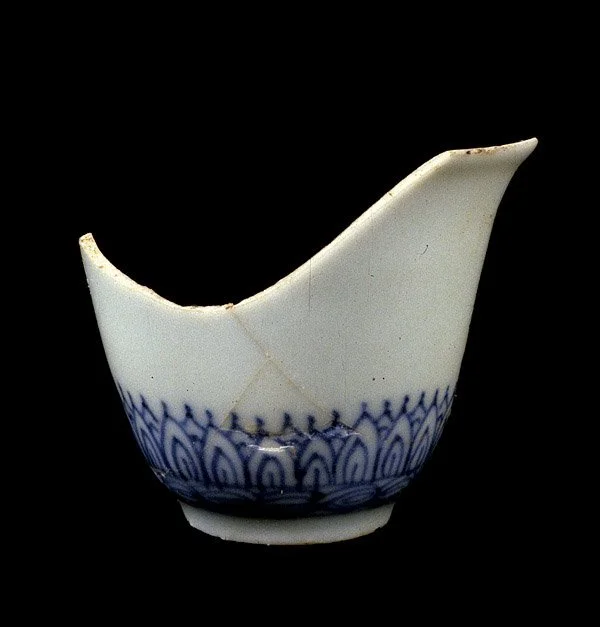
Chinese porcelain Wan Li wine cup found in a c. 1610 part of James Fort. Several of these vessels have been found during the archaeological excavations of James Fort, where they had probably been used by the colony’s gentlemen to drink their distilled spirits (aqua vitae).
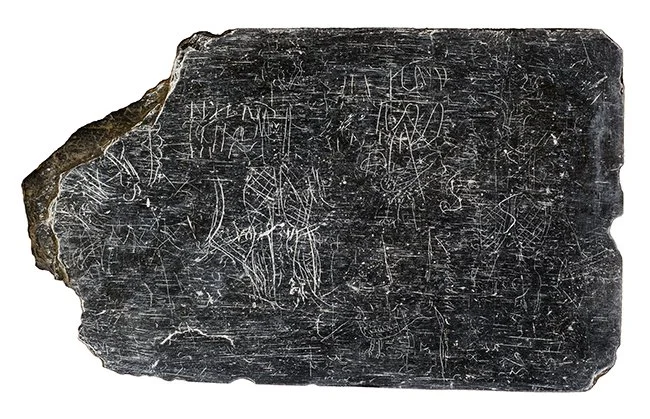
This tablet was found in a c. 1608-1610 well in the center of James Fort that was dug by order of Captain John Smith. Slate tablets were used aboard ships to temporarily record the daily wind conditions and the ship’s speed and direction. A slate tablet is reusable when the marks are made by a slate pencil whose lines can be wiped off for the next set of marks—the proverbial “clean slate.”
Visiting Jamestown Today
Visitors can explore Historic Jamestowne, where archaeologists are still actively uncovering the remains of the original 1607 fort and the early colonial landscape surrounding it. Walking the island feels remarkably immediate—archaeological pits, preserved foundations, and interpretive trails bring the colony’s fragile beginnings into sharp focus.
Just a short drive away, the Jamestown Settlement offers a complementary experience. This living history museum features recreated structures, costumed interpreters, and full-scale replicas of the ships that carried the first English colonists across the Atlantic.
It also pairs well with a visit to the nearby American Revolution Museum at Yorktown, making it easy to follow the arc of early American history from first settlement through independence.
PRO TIP: Combo tickets are available for Jamestown Settlement and the American Revolution Museum of Yorktown. Tickets to Historic Jamestowne can be purchased separately through Preservation Virginia.
FULL DAY TOUR: Learn about early American history with this full-day group tour of Jamestown, Yorktown, and other sites. Travel comfortably in an air-conditioned vehicle with a driver-guide and go to each site in chronological order. Enjoy a midday stop for a Colonial-style lunch at a local restaurant. Hundreds of 5-star reviews!
