
Easter & Passover Flowers
Updated: January 18, 2026
Easter and Passover arrive with the first true breath of spring — seasons of renewal, hope, and fresh beginnings. It’s no surprise that both holidays are filled with flowers.
Lilies, daisies, violets, carnations, irises, hyacinths, and tulips appear on tables and in sanctuaries, their colors and graceful forms echoing the deeper themes of purification, rebirth, and personal transformation.

Photo by Zoe Schaeffer / Unsplash
Easter
Easter Sunday commemorates the resurrection of Jesus Christ, as described in the New Testament. For Christians, the resurrection represents redemption, the forgiveness of sin, and the promise of renewed life—spiritual themes that strongly shape the symbols associated with the holiday.
The Easter Lily
The flower most closely associated with Easter is the Easter lily (Lilium longiflorum). This white, trumpet-shaped lily is traditionally displayed in churches and homes during the Easter season. Its white color signifies purity and hope, while its trumpet form has long been interpreted as a visual echo of the proclamation of Christ’s resurrection. Although native to Japan, the Easter lily became widely adopted in Western Christian symbolism in the late 19th century and is now firmly linked to Easter celebrations.

An Easter lily is a specific variety of lily that is native to the Ryukyu Islands of southern Japan. It is also known as the Bermuda lily or Japanese lily. Before 1941, the majority of Easter Lily bulbs were exported from Japan to the United States. Today, over 95% of all bulbs grown for the potted Easter Lily market are produced by just ten farms in a narrow coastal region straddling the California-Oregon border. Photo: takakophoto / Shutterstock
Lily of the Valley
Lily of the valley (Convallaria majalis) is also a familiar spring flower and has long been associated with Christian contexts, particularly as a symbol of purity, humility, and the Virgin Mary. It is sometimes used in church decoration during the spring season and may appear around Easter as part of broader seasonal floral traditions.
However, despite its name and shared white coloring, lily of the valley is not a true lily and carries a different symbolic emphasis. Its associations are more closely tied to the Incarnation and the Advent of Christ than to the Resurrection itself. Botanically, it belongs to a different plant family and is easily distinguished by its small, bell-shaped blossoms, in contrast to the large, trumpet-shaped blooms of the Easter lily.
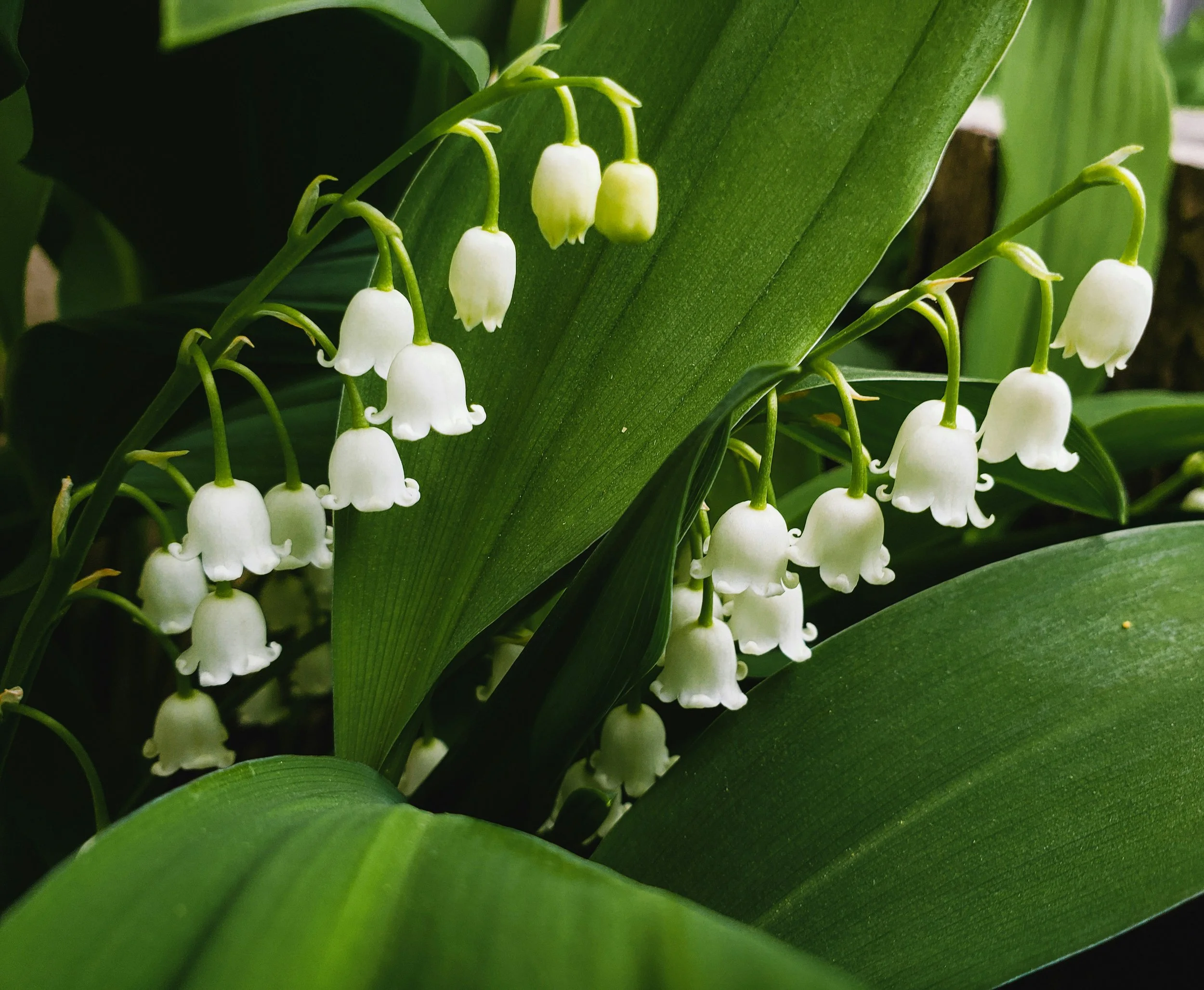
Lily of the valley (Convallaria majalis) is a woodland spring flower native to Europe and northern Asia. Still grown primarily in Europe—especially for the French and Dutch markets—it is also cultivated on a smaller scale in cooler regions of the United States, with much of the U.S. cut-flower supply imported from Europe. Photo: Jeffrey Hamilton / Unsplash
Lilies in the Bible
Lilies appear throughout the Bible as poetic symbols of beauty, humility, and divine care rather than as precise botanical references. In the Song of Songs, traditionally attributed to King Solomon, floral imagery is used to express love and self-worth rooted in the natural world. When the speaker declares, “I am the rose of Sharon, and the lily of the valleys” (Song of Songs 2:1), the meaning is not rarity or luxury, but natural beauty and humility—a comparison to wild flowers that grow freely in open fields rather than cultivated gardens or royal courts.
“I am the rose of Sharon, and the lily of the valleys.”
This emphasis on unadorned beauty and trust in divine provision reappears in the New Testament. In the Sermon on the Mount, Jesus urges his listeners to “consider the lilies of the field,” reminding them that even Solomon, famed for his splendor, was not clothed as beautifully as these simple flowers. Together, these passages use lilies to convey a consistent message: spiritual worth is not measured by wealth or display, but by faith, humility, and reliance on God.
Importantly, these Biblical “lilies” refer broadly to flowering plants familiar to the ancient world, not to specific modern species, such as the lily-of-the-valley. Their symbolic power lies in what they represent—natural grace, providence, and renewal—rather than in botanical precision.
“Consider the lilies of the field, how they grow: they toil not, neither do they spin; and yet..... Solomon in all his glory was not arrayed like one of these.”
Passover
Passover commemorates the liberation of the Israelites from slavery in Egypt, as recounted in the Book of Exodus. Unlike Easter, Passover is not traditionally associated with flowers or floral symbolism. The holiday’s meaning is expressed primarily through ritual, storytelling, and food—especially during the Seder, which centers on the retelling of the Exodus.
Flowers may appear as simple, seasonal table decorations, reflecting springtime rather than serving a religious or symbolic role. When used, they are generally understated to avoid distracting from the Seder's ritual focus. Modern aesthetic choices, such as blue and white, draw loosely on longstanding Jewish associations with holiness and divine presence, but these colors are cultural rather than prescribed.
Plants do play an important role in the Biblical Passover narrative, most notably hyssop. During the first Passover, hyssop branches were used to apply lamb’s blood to the Israelites’ doorposts as a sign of protection. In later Biblical texts, hyssop becomes associated with ritual purification and cleansing, as in Psalm 51. Its significance is symbolic and ritual—not decorative.
“Against you, you only, have I sinned and done what is evil in your sight, so that you may be justified in your words and blameless in your judgment…Purge me with hyssop, and I shall be clean; wash me, and I shall be whiter than snow.”
Because Passover observance is governed by religious law, decorations should remain simple. If flowers are given as a gift, they should be potted or already placed in water, as certain forms of work, including flower arranging, are restricted during the holiday.

Hyssop is an evergreen plant that originally grew in southern Europe, the Middle East and central Asia. It’s classified as a garden herb, and is part of the mint family. Photo by Madeleine Steinbach / Shutterstock
Beyond the Classics
Flowers such as daffodils, tulips, daisies, and irises are commonly used during the spring season, particularly around Easter and Passover. Their presence reflects seasonality and renewal rather than formal religious symbolism—especially at Passover.
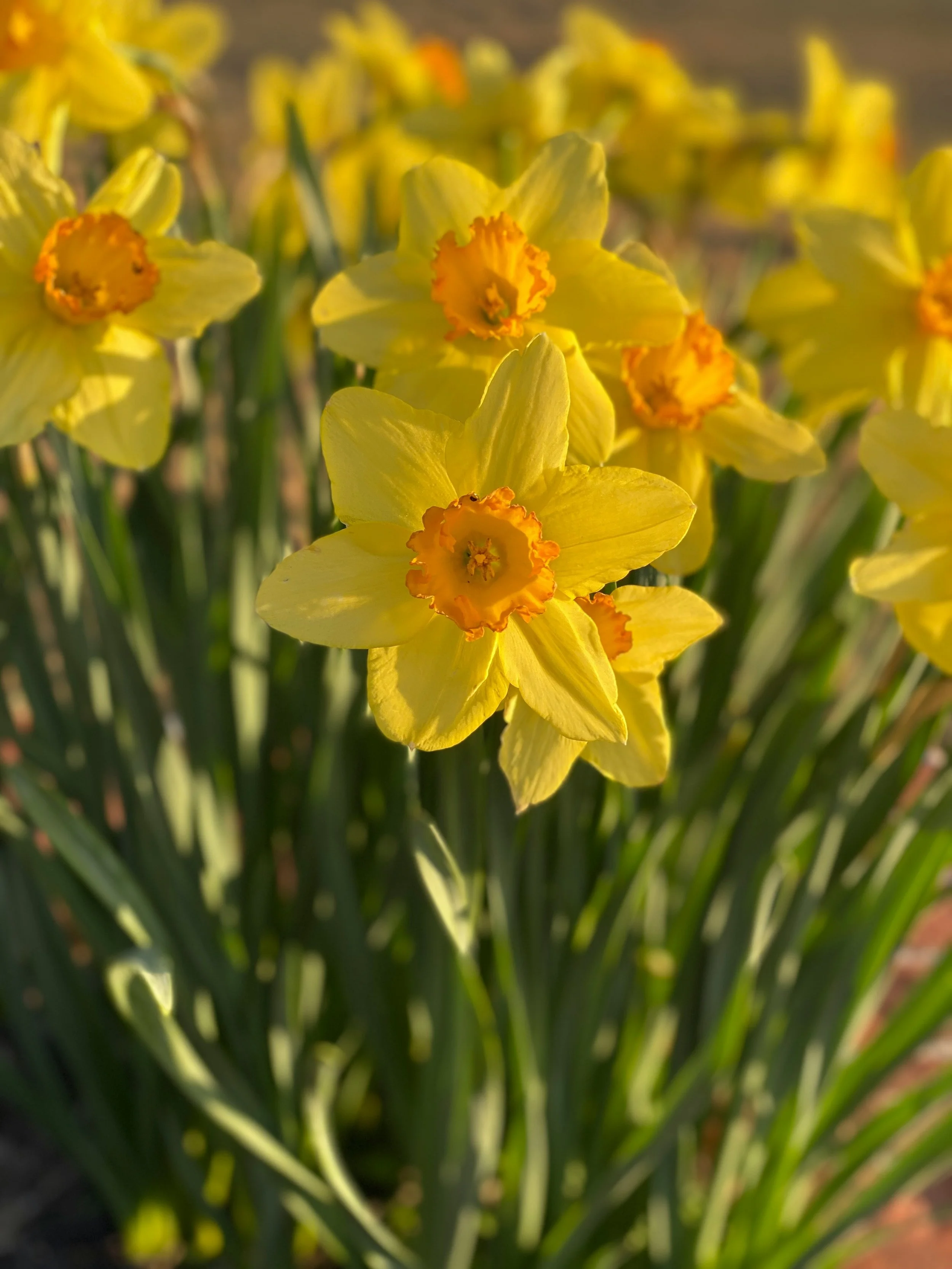
Daffodils are a type of flowering plant that belongs to the genus Narcissus. They are native to Europe, North Africa, and Asia. Photo: Heidi Samuelson / Unsplash
Daffodils
Daffodils are among the earliest flowers to bloom, making them natural heralds of spring and renewal. Their trumpet-shaped blossoms and bright yellow color align closely with themes of awakening, hope, and joy. As the birth flower for March, daffodils mark the seasonal turning point toward longer days and new life. In several cultural traditions, they are also associated with good fortune and prosperity, reinforcing their optimistic symbolism during both Easter and Passover.
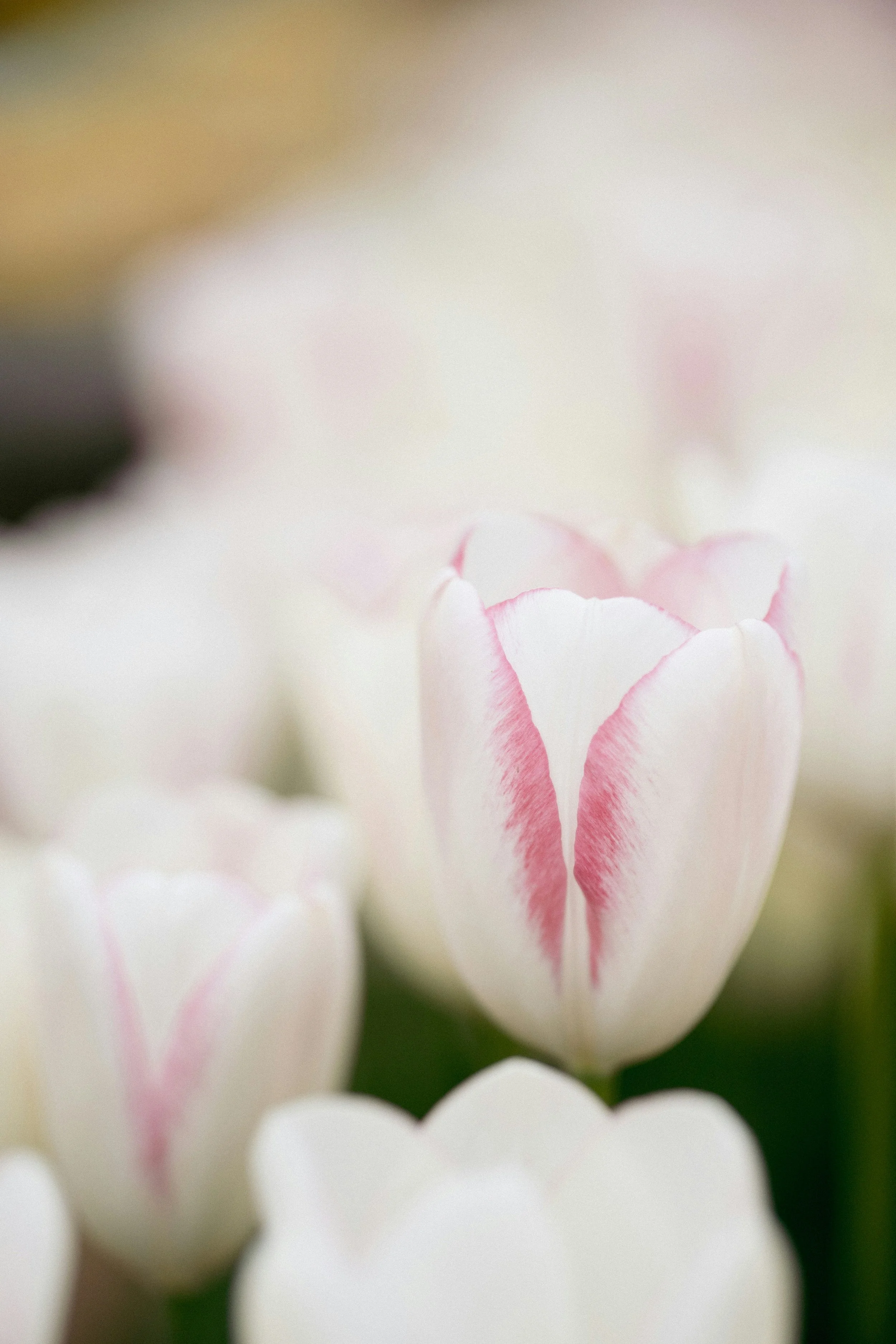
Tulips belong to the genus Tulipa. They are native to Central Asia and Persia, but are now widely cultivated as ornamental plants in many parts of the world. Photo by Ketsia Juste / Unsplash
Tulips
Tulips appear in a wide range of colors, many of which carry meanings that align naturally with the themes of Easter. While white tulips most clearly symbolize purity, forgiveness, and spiritual renewal, yellow tulips convey joy and new beginnings, reflecting the celebratory nature of the season. Pink tulips are associated with care and gentle affection, while purple tulips evoke dignity and reverence and have long-standing connections to Christian liturgical tradition. Together, these colors reinforce Easter’s message of hope, renewal, and resurrection.
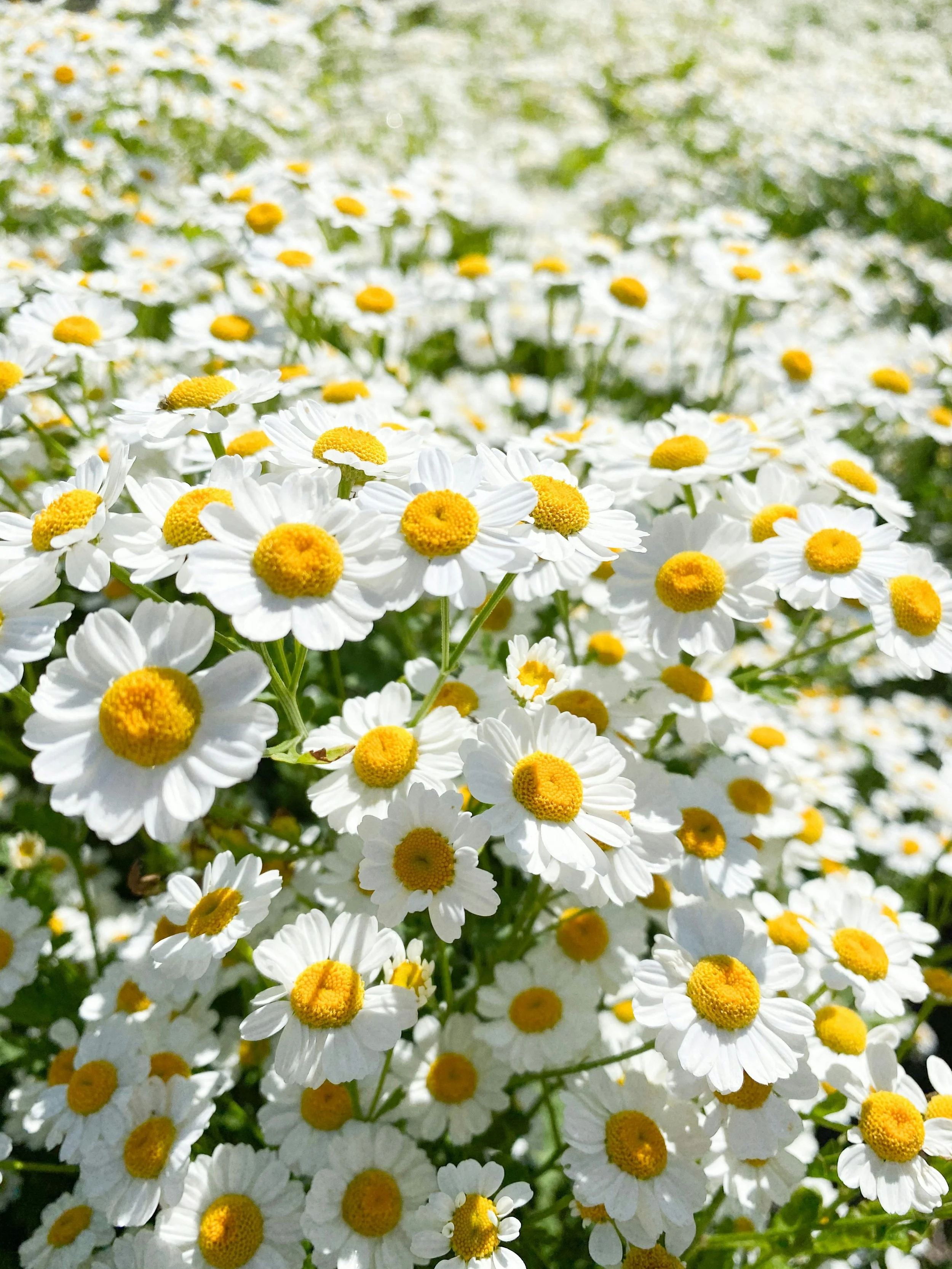
Daisies are native primarily to Europe and temperate regions of western Asia, where they have grown wild in meadows and grasslands for centuries. The common daisy (Bellis perennis) spread widely through cultivation and naturalization and is now found across Europe, North America, and many other temperate regions worldwide. Different species of daisies are native to other parts of the world as well, but the classic white daisy with a yellow center originates in Europe. Photo by Elana Selvig /Unsplash
Daisies
Daisies, with their white petals and bright yellow centers, are enduring symbols of simplicity, optimism, and renewal. Their clean, open form evokes clarity and freshness, while the contrast between white petals and a sun-like center reinforces associations with light, hope, and new beginnings—qualities long linked to the arrival of spring.
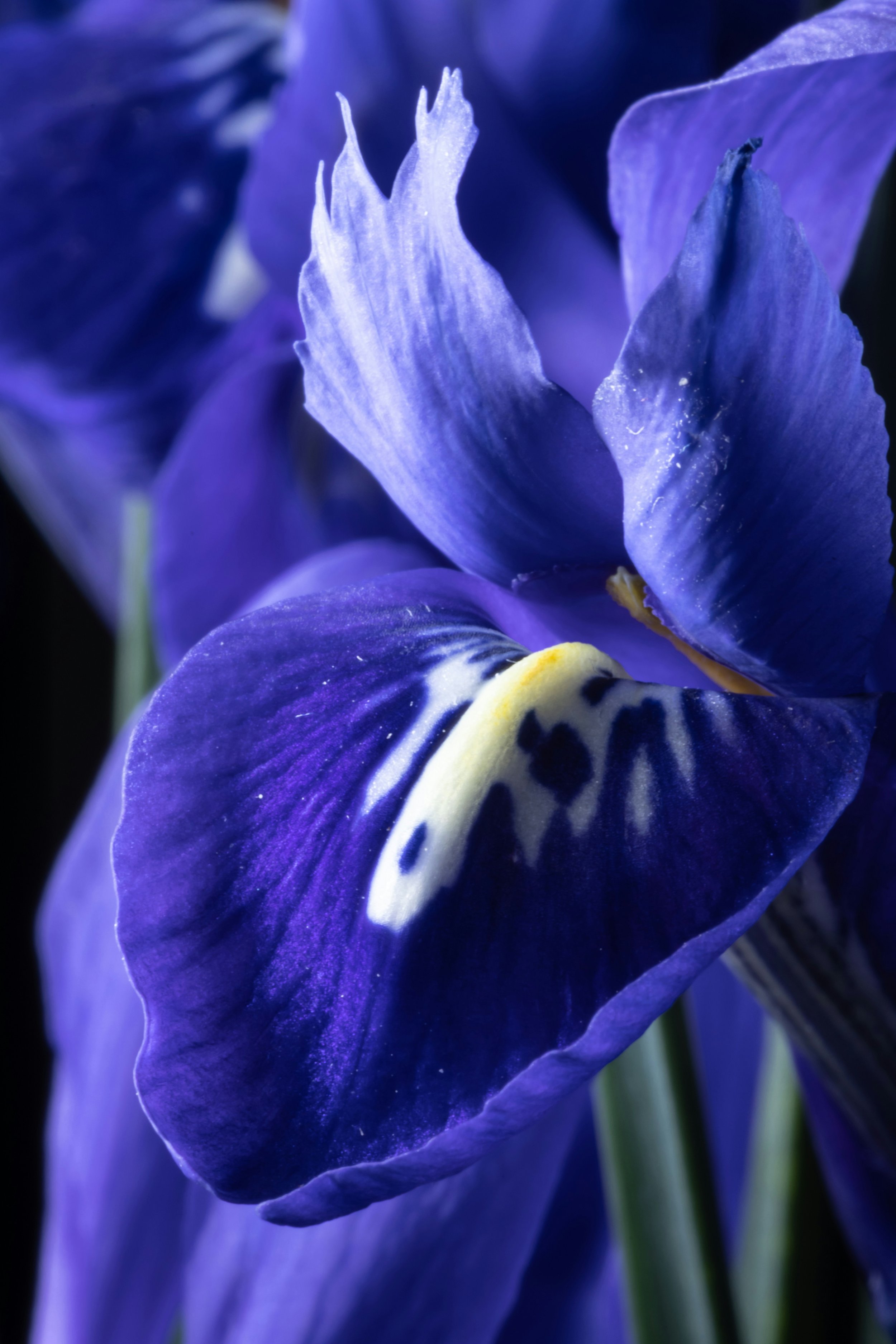
Iris species are native primarily to the Eastern Mediterranean, the Middle East, and parts of Central Asia, with additional native species found across Europe and North America. The flower’s name comes from Greek mythology, reflecting its ancient presence in the Mediterranean world. Photo by Tasha k / Unsplash
Irises
Irises carry layered symbolic meaning drawn from both Christian tradition and classical mythology. In Christian symbolism, the three upright petals are often interpreted as representing the Holy Trinity and the virtues of faith, hope, and love. The flower takes its name from the Greek goddess Iris, the messenger between gods and mortals and the personification of the rainbow, linking the iris to ideas of communication and divine connection. While irises appear in many colors, deep blue varieties have long been associated with reverence, wisdom, and spiritual depth.