
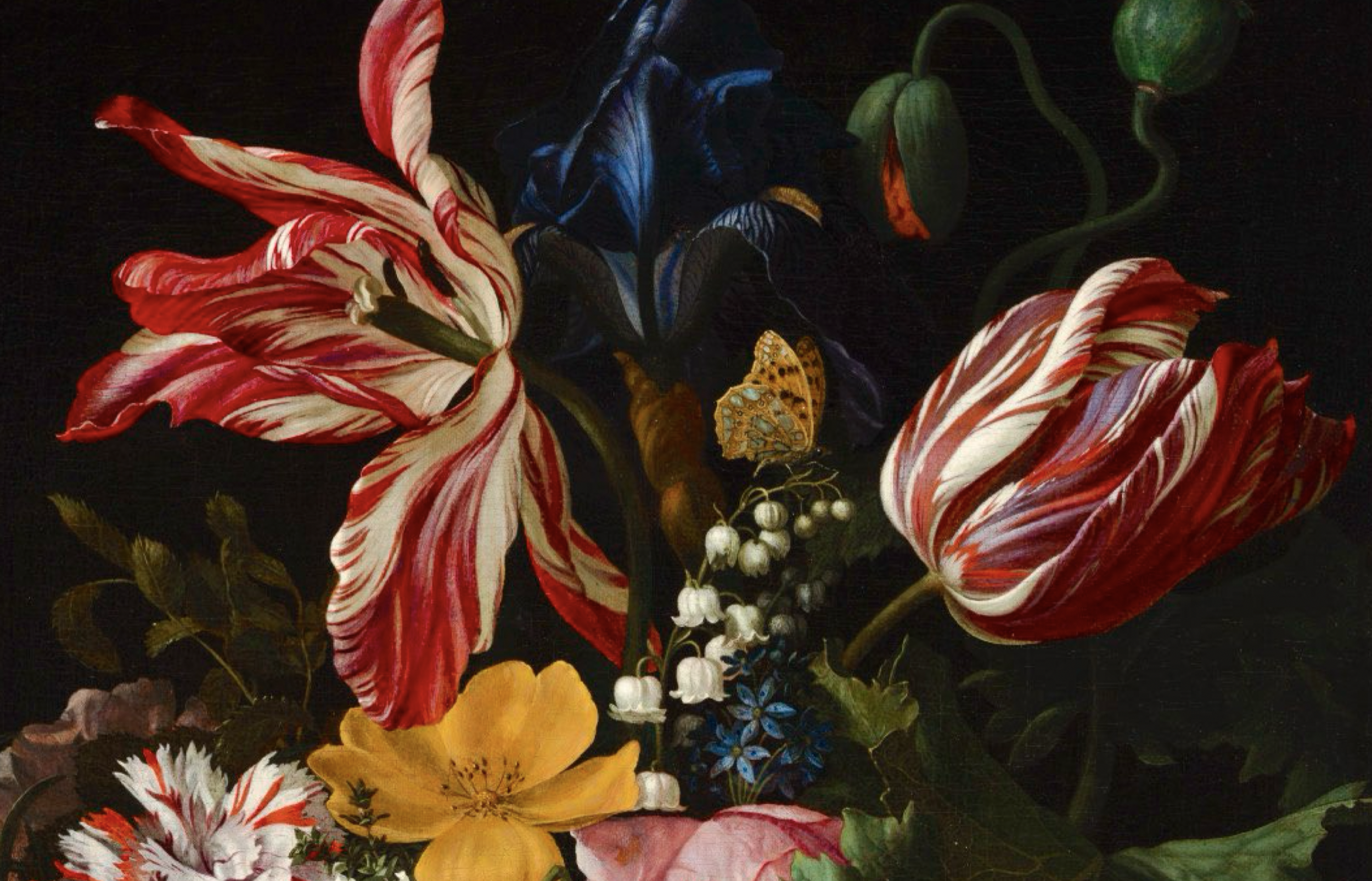
Flower Still Life [detail], 1669, Maria van Oosterwijck, Cincinnati Art Museum
What is in a name? If William Shakespeare had written about the 17th-century botanical obsession rather than the tragic, star-crossed lovers of Verona, he might have chosen a tulip instead of a rose to make his point.
But with the tulip, the phrase takes on a wonderfully literal, ironic twist. The bloom we cherish today is quite literally a flower by another name—the result, according to a popular tale, of a classic linguistic mix-up. We call it a tulip, but if history had gone just a little bit differently, we might very well be calling it a turban.
A Case of Mistaken Identity
In 16th-century Istanbul, during the reign of Sultan Süleyman the Magnificent, tulips were already prized for their beauty and flourished in the gardens of the Ottoman elite.
But to European travelers, these striking flowers were something of a novelty, and naturally, they wanted to know what they were called.
According to a delightful, if historically unconfirmed, tale, one particularly curious European traveler posed just that question to an interpreter. The answer, however, was apparently lost in translation.
Perhaps the interpreter gestured toward a tulip tucked into the folds of a turban, a fashionable way to display the blooms in the Ottoman world. Or perhaps he was simply explaining that the flower's graceful, cup-like shape resembled the folds of the elaborate headwear. Either way, the interpreter used the Ottoman Turkish word tülbend, derived from the Persian dulband, meaning turban, and referring to the fine muslin used to wrap it.
The traveler missed the distinction entirely. Believing he had been given the flower's proper name, he recorded it as tülbend. And with that, a simple misunderstanding took root. The word traveled west, evolved into the Latin tulipa, and eventually became the English tulip.
The tale is often associated with Ogier Ghiselin de Busbecq, the Habsburg ambassador to Süleyman's court, whose writings helped introduce the flower to Western Europe. Whether Busbecq himself made the mistake, or whether the exchange ever happened quite this way, remains uncertain. But the linguistic connection between tulip and tülbend is real.
The delicious irony? The Ottomans had a perfectly good name for their beloved flower all along: lâle.
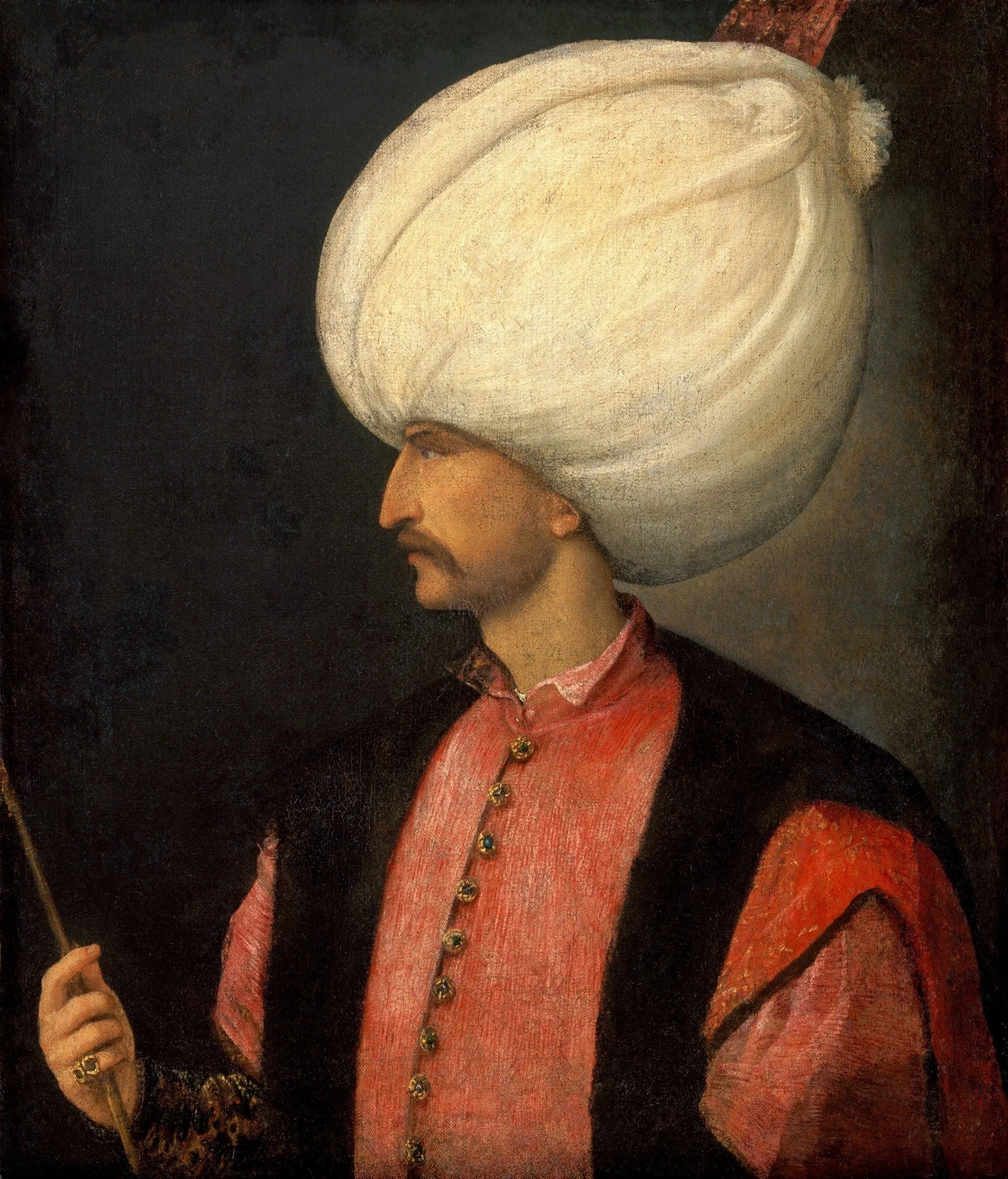
Portrait of Suleiman, c. 1530, Titian, Kunsthistorisches Museum, Vienna, Austria
The Divine Meaning of Lâle
While Europeans were busy adopting a name born of a misunderstanding, the Ottomans had long known the flower by a far more poetic name: lâle, borrowed from the Persian laleh.
But lâle was more than a pretty word for a beautiful flower. Its subtle phonetic echo of Allah, the Arabic word for God, was only the beginning. Written in the Arabic script used by the Ottomans, the two words contained exactly the same letters, simply arranged in a different order. Even more remarkably, both shared the numerical value of 66 in abjad, the traditional system of assigning numbers to letters.
For the Ottomans, these connections were rich with spiritual significance. The tulip came to symbolize not only beauty and elegance, but also devotion and the divine. Its graceful silhouette appeared throughout Ottoman visual culture, from exquisite İznik ceramics to embroidered silks and architectural ornament.
And while the European name evolved into tulip, the original name endured. To this day, in Turkish, the flower is still called lale.
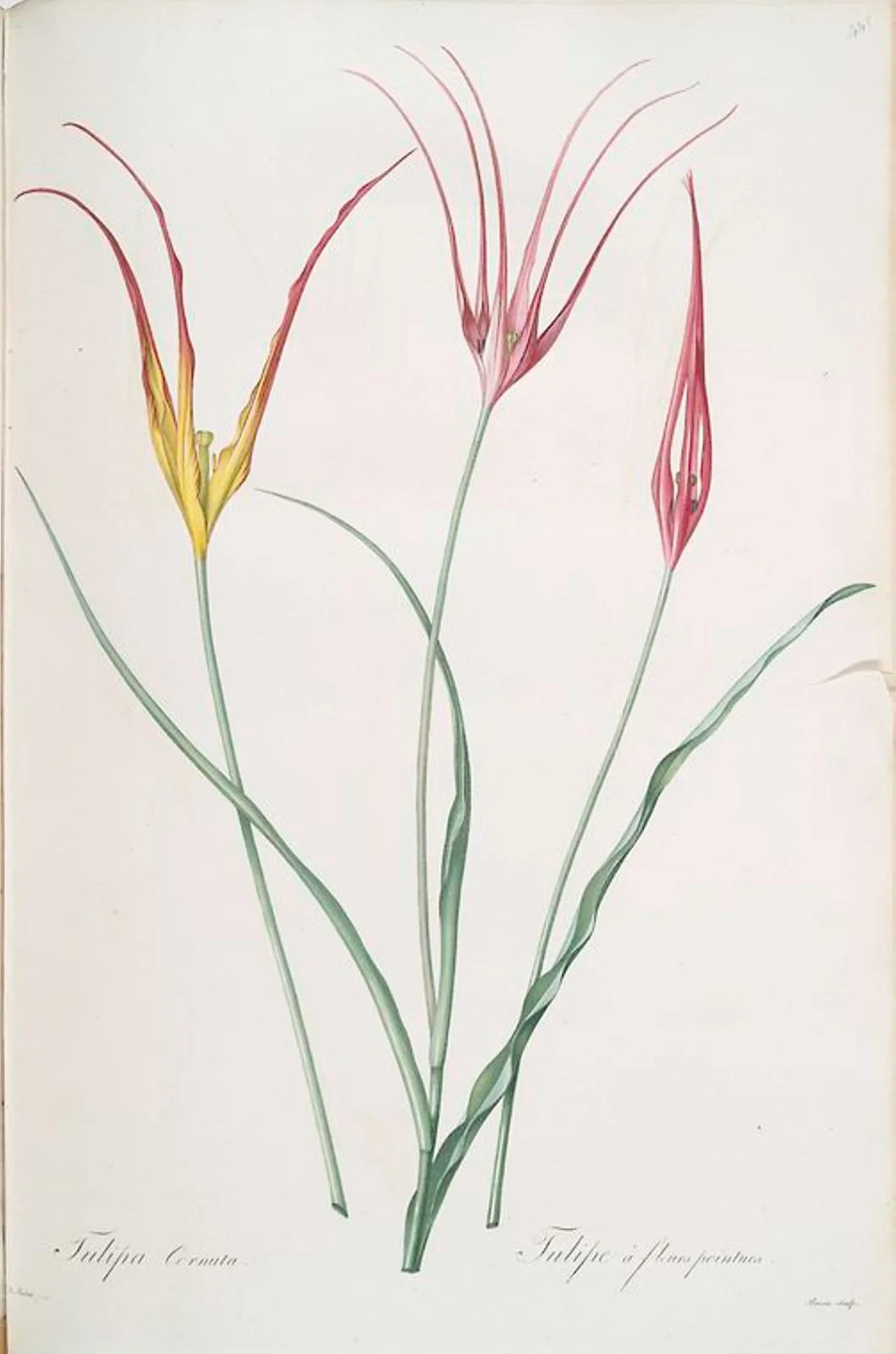
Turkish Tulip (Tulipa cornuta), Pierre-Jospeh Redouté, from Les Lilliacées, 1815, New York Public Library Digital Collections
A Flower by Any Other Name
One flower, two names, and two very different stories. To Europeans, the tulip inherited its name from a turban, thanks to what may have been a simple misunderstanding. To the Ottomans, lâle carried centuries of cultural and spiritual meaning.
Shakespeare famously wondered whether a rose by any other name would smell as sweet. The tulip, with its nearly nonexistent fragrance, may not be the best flower to put that theory to the test. But its curious history suggests that while a name may not change the flower itself, it can certainly change the way we see it.
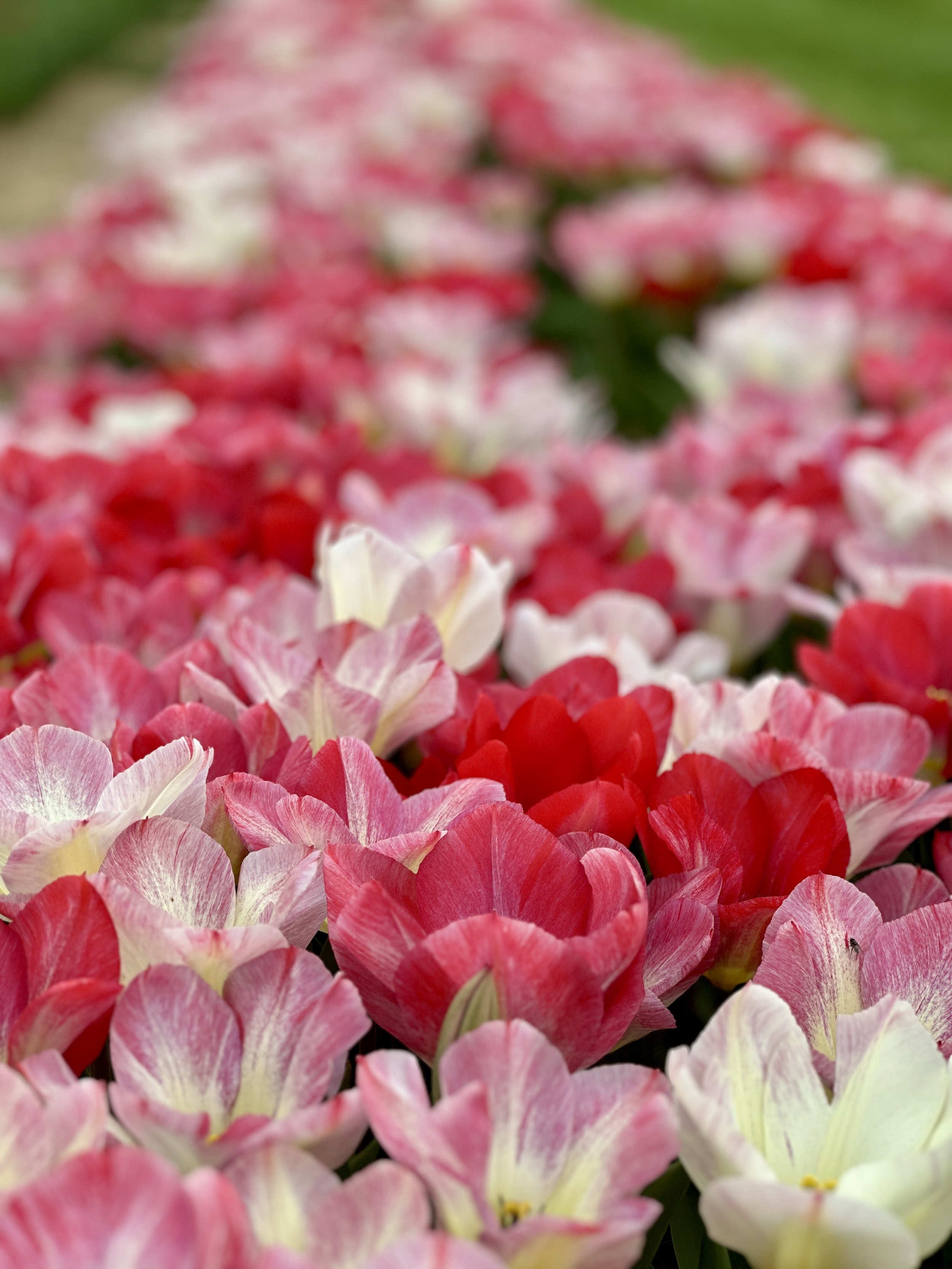
Photo by author.