Why is New York City Called the Big Apple?
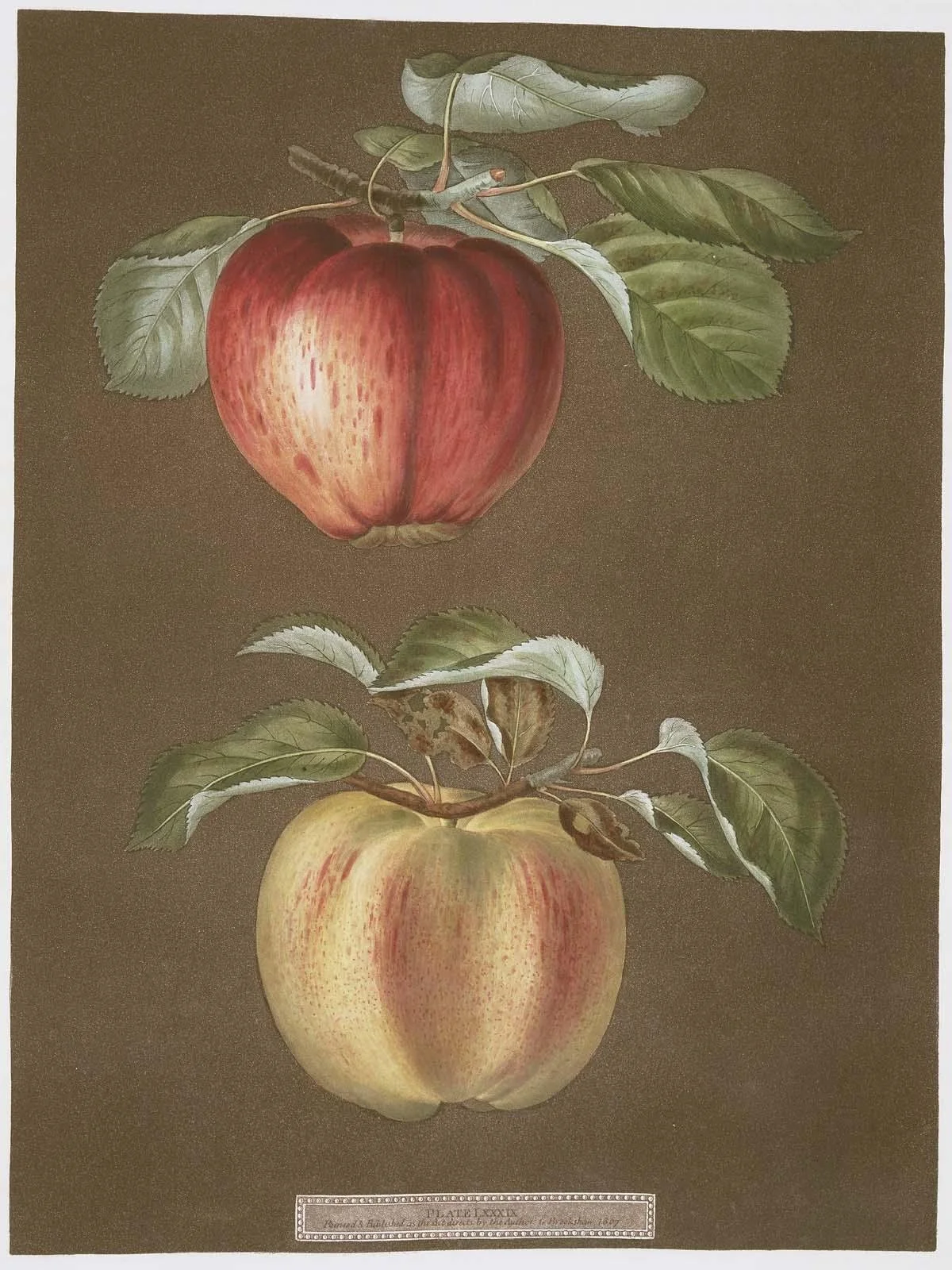
A Phoenix Apple and a Norman’s Beauty, from Pomona Britannica; or, A Collection of the Most Esteemed Fruits at Present Cultivated in this Country, 1812, After George Brookshaw (English, 1751–1823), Possibly by Richard Brookshaw (English, 1736–about 1804), Printer Thomas Bensley (English, about 1760–1835), The Museum of Fine Arts Boston
Every year, millions of visitors flock to New York City, buying bright red t-shirts, caps, and mugs stamped with its most iconic moniker: The Big Apple. But if you ask the average tourist—or even a lifelong New Yorker—where that name actually comes from, you will likely get a handful of completely different answers.
Did it start in the underground jazz clubs of Harlem? Was it cooked up by Madison Avenue ad executives in the 1970s? Or does it have something to do with the city's agricultural past?
The truth is a fascinating mix of all these histories. While several popular theories float around, etymologists and historians have traced the exact evolution of the phrase. Here is the breakdown of the most popular theories, how they connect, and the real story of how NYC became the world’s biggest fruit.
🏎️ The Horse Racing Connection (The Actual Origin)
The Verdict: True. This is where the phrase officially entered the modern lexicon.
In the early 1920s, a sports writer named John J. Fitz Gerald wrote a racing column for the New York Morning Telegraph. In 1921, while visiting a racetrack in New Orleans, he overheard African American stable hands referring to the New York racing circuit as "the big apple."
In the racing world of that era, New York racetracks offered the biggest prizes, the grandest venues, and the stiffest competition. To "make it to the big apple" meant you had reached the major leagues of horse racing. Fitz Gerald loved the phrase so much that he named his column "Around the Big Apple."
On February 18, 1924, Fitz Gerald explicitly defined his use of the phrase in his column, writing:
"The Big Apple. The dream of every lad that ever threw a leg over a thoroughbred and the goal of all horsemen. There's only one Big Apple. That's New York."
🎷 The Jazz Musicians (The Popularizer)
The Verdict: True, but as a secondary wave.
By the late 1920s and 1930s, the phrase leaped from the racetrack to the stage. Show business and jazz musicians adopted the slang of the sporting world.
For a traveling jazz artist in the swing era, playing small towns was called "the twigs" or "the branches." Playing New York City, home to the premier clubs and the ultimate fame, was playing "The Big Apple."
An old saying among jazz musicians captured this perfectly: "There are many apples on the tree, but only one Big Apple." The nickname became synonymous with jazz culture, even inspiring a popular 1930s dance craze and a hit song called "The Big Apple."
🍎 The 1970s Tourism Campaign (The Global Rebirth)
The Verdict: Semi-True. This campaign did not invent the phrase, but it single-handedly rescued it from obscurity.
By the late 1960s and early 1970s, New York City was facing a severe economic crisis. Crime rates were high, the city was flirting with bankruptcy, and its global image was suffering. Tourists were staying away.
In 1971, Charles Gillett, the president of the New York Convention and Visitors Bureau, launched a massive promotional campaign to revitalize the city's image. He needed a cheerful, clean, and welcoming symbol. He dug up the old 1920s jazz and racing term, "The Big Apple," and put it front and center.
The campaign distributed red apple pins, stickers, and t-shirts worldwide. It was incredibly successful, completely reshaping the city's brand. A few years later, in 1977, the state built on this momentum by launching the legendary "I Love New York" campaign (featuring the famous heart logo designed by Milton Glaser), forever cementing the apple as the universal visual symbol of NYC.
Image Source: Shutterstock
Debunking the Myths
Because the nickname is so famous, several urban legends have cropped up over the decades that historians have definitively debunked:
The Brothel Myth: A persistent rumor claims that a famous 19th-century brothel madam named Eve ran a house of ill repute, and her sex workers were called "apples." There is zero historical evidence to support this.
The Depression Food Lines: Another theory suggests it came from the unemployed selling apples on street corners during the Great Depression. While apple-selling did happen, the phrase "The Big Apple" was already well documented in newspapers years before the 1929 stock market crash.
From Slang to Permanent Landmark
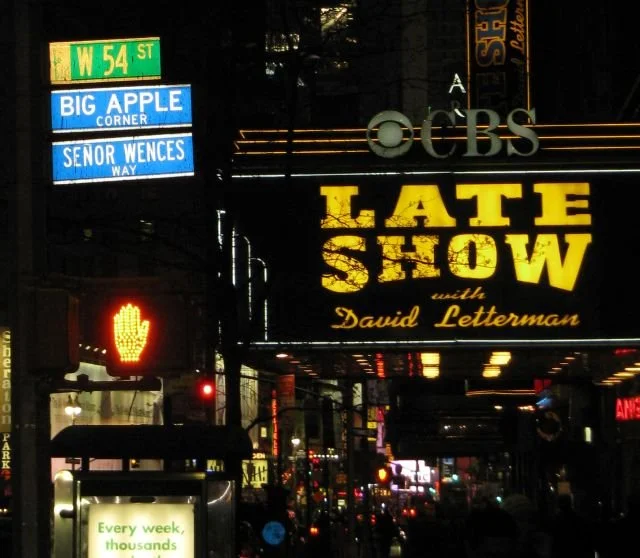
Big Apple Corner at 54th Street and Broadway, in Manhattan's Theater District via Wikipedia
The phrase is so deeply woven into the fabric of the city that in 1997, the New York City Council officially named the corner of West 54th Street and Broadway—where John J. Fitz Gerald lived—"Big Apple Corner."
So, the next time you take a bite out of New York City, remember that you are participating in a century-old legacy that traveled from Southern racetracks to Harlem jazz clubs, finally arriving as a beacon of resilience that saved the city's modern identity.