
How to Plant Tulip Bulbs in the Ground
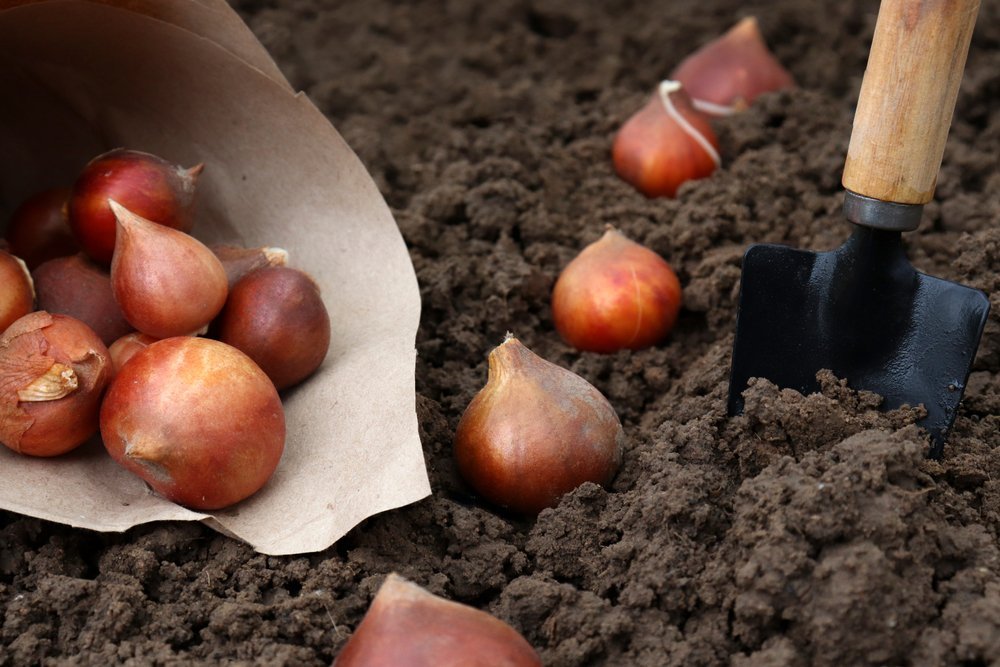
Image Source: Natallia Ustsinava via Shutterstock
I learned how to plant tulip bulbs while living as an expat in the Netherlands, home to the world's largest bulb industry. Autumn quickly became one of my favorite seasons, as fields, garden centers, and neighborhood flower shops filled with bins of bulbs waiting to become next spring's display.
Even now, planting tulips remains one of my favorite fall traditions. Like apple picking, pumpkin patches, and crisp morning walks, it marks the changing of the seasons. Better yet, it offers something many fall rituals don't: a promise of spring. Every bulb tucked into the ground is a little investment in brighter days ahead.
Over the years, I've planted tulips in both gardens and city containers, and I've picked up a few tricks from the Dutch along the way—including their ingenious method for creating long-lasting container displays, known as bulb lasagne.
Whether you're filling an entire flower bed or planting a handful of bulbs in your backyard, these simple tips will help you choose the right planting time, grow healthier tulips, and create a display that will reward you when spring finally arrives.
Plant in Fall
If you remember only one thing about planting tulips, make it this: plant them in autumn.
Tulips evolved in the cold, mountainous regions of Central Asia, where their bulbs spend winter underground before bursting into bloom each spring. Today's garden tulips still depend on that same period of winter chill to develop healthy roots and prepare for flowering.
As a general rule, plant tulip bulbs about 6–8 weeks before the ground freezes, when nighttime temperatures consistently fall between 40–50°F (4–10°C).
That usually means:
September–October in colder northern climates
November–December in milder regions
Even later in the warmest parts of the country
Gardeners in warm climates should refrigerate tulip bulbs for about 12 weeks before planting to provide the cold period they naturally require. This process is known as forcing.
Field Note: Resist the temptation to plant too early. Warm soil encourages disease and rot before bulbs have a chance to establish themselves.
Give Them the Right Home
Plant each bulb 6–8 inches deep and 4–6 inches apart, with the pointed end facing upward. A simple guideline is to plant bulbs at a depth roughly three times their height.
Tulips thrive in full sun, although gardeners in hotter climates often enjoy a longer bloom season by planting them where they receive afternoon shade.
More important than sunlight, however, is drainage.
Tulips dislike wet feet. Their bulbs quickly rot in heavy, waterlogged soil, so loose, well-drained soil is essential.
There is a reason tulips flourish so spectacularly in the Netherlands. Much of the country's commercial bulb production takes place in sandy coastal soils, where excess water drains away quickly, and bulbs remain healthy.
Water Wisely
After planting, water the bulbs thoroughly to settle the soil and signal that it's time to begin growing roots.
After that, leave them alone.
In most climates, normal winter rainfall provides all the moisture tulips need. Unless you're experiencing an extended drought, additional watering is unnecessary—and can actually shorten the bulbs' lifespan.
Should You Fertilize?
Tulip bulbs are remarkable little storage systems. Everything needed to produce next spring's flower is already packed inside the bulb.
Because of that, fertilizer isn't essential.
However, most modern garden tulips gradually decline after their first season. While tulips are technically perennials, many modern hybrids return with fewer flowers or smaller blooms—or disappear altogether.
If you hope to encourage stronger returns, apply an organic bulb fertilizer (such as a 4-10-6 formula) at planting time, using approximately one teaspoon per bulb.
Designing a Tulip Display
The way you arrange tulips can have just as much impact as the varieties you choose.
For the boldest effect, think in terms of drifts and masses rather than individual flowers. A single tulip rarely makes much of a statement, but dozens planted together create the sweeping carpets of color that have made tulips famous.
Some classic planting styles include:
Bedding: Large blocks of closely planted tulips for maximum color.
Bouquet planting: Tight clusters that resemble oversized floral arrangements.
Pocket planting: Small, concentrated groups tucked throughout the garden to create bursts of color.
Ribbon planting: Long bands of tulips along paths, borders, walls, or hedges.
Serpentine planting: Curving, river-like drifts that lead the eye through the landscape.
Naturalized planting: Informal groupings designed to resemble wildflowers growing in the wild.
Sprinkled planting: Individual bulbs scattered among existing perennials wherever space allows.
A Few Final Tips
Pair taller tulips with low-growing perennials or evergreens so their stems and blooms remain the stars of the show.
Don't be afraid to experiment with color. Some gardens make a dramatic statement by planting large sweeps of a single hue, while others mix varieties freely for a more relaxed, cottage-garden feel.
Finally, choose tulips with early-, mid-, and late-season bloom times. Layering varieties in this way can extend your tulip display to six weeks or more, especially when combined with other spring-flowering bulbs and perennials.